Ep #387: Perfectionism: From A+ Pressure to B+ Energy
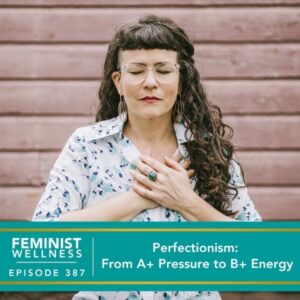
Are you exhausted by the endless drive to be perfect? Do you find yourself constantly overthinking, overproducing, or feeling like nothing you do is ever enough?
This week, I dive into the patterns behind perfectionism and why striving for flawless results can keep you stuck. We’ll explore how perfectionism shows up in your daily life - from over-preparing and overexplaining to people-pleasing and second-guessing yourself - and why these habits aren’t personal failures, but survival strategies your nervous system learned early on.
Tune in today as I break down how overfunctioning, self-abandonment, and hypervigilance feed the cycle, leaving you drained, anxious, and disconnected from your own wants and needs. By the end of this episode, you’ll have a clear framework for noticing perfectionist patterns in yourself, understanding their roots, and taking small, intentional steps toward releasing the need to control outcomes.
Emotional Outsourcing is a nervous system pattern where you habitually seek safety, worth, and belonging from others rather than yourself. The Shift is a 12-week structured somatic program designed to break this cycle by addressing these three root needs directly within your own life. Click here to find out more.
Key Takeaways & Timestamps:
[00:00] – Recognizing Perfectionism
How perfectionism shows up in everyday behaviors and why it keeps you stuck.
[03:12] – The Survival Mechanisms Behind Perfectionism
Why overfunctioning and self-abandonment develop as adaptive strategies.
[07:45] – The Emotional and Energetic Cost
Understanding how perfectionism drains your nervous system and fuels anxiety.
[12:30] – Patterns of Self-Abandonment
How constantly prioritizing others’ comfort reinforces perfectionist habits.
[16:50] – Practical Steps to Break the Cycle
Strategies for noticing perfectionist triggers and interrupting them in real time.
[21:15] – Reclaiming Your Energy and Focus
How to reconnect with your authentic self and move forward with intention.
[27:05] – Embracing Imperfection
Shifting perspective to allow mistakes, learning, and sustainable growth.
Listen to the Full Episode:
Episodes Related to Perfectionism:
• Ep #3: How to Conquer Anxiety
• Ep #7: Fatigue - Adrenal Edition
• Ep #42: The Next Right Thing
• Ep #43: Worry and Your Nervous System
• Ep #44: How to Stop Worrying for Good
• Ep #386: Wants and Needs: How to Know What Matters Most to You
Featured on the Show:
• Grab my free suite of meditations and nervous system exercises here!
• If you have not yet followed, rated, and reviewed the show on Apple Podcasts, or shared it on your social media, I would be so grateful and delighted if you could do so!
• Join me in my group coaching program, Anchored: Overcoming Codependency
• Come join us in The Embodied Learning Lab!
• Get your copy (or 10) of my book, End Emotional Outsourcing!
• Check out my courses here!
Full Episode Transcript:
This is Feminist Wellness, and I’m your host, Nurse Practitioner, somatics and nervous system nerd, and life coach Béa Victoria Albina. I’ll show you how to get unstuck, drop the anxiety, perfectionism, and codependency so you can live from your beautiful heart. Welcome, my love, let’s get started.
Hello, hello my love. And I hope this finds you doing so well. Welcome back. Last week we started talking about what happens when people lose connection with their own wants, their needs, their internal signals, their trust in themselves and their real knowing of what it is that they want. One of the biggest things that blocks folks from acting on what they actually want is, drumroll please, perfectionist habits.
So if you feel stuck, I'm going to reckon there is a good chance it's not because you're doing things wrong, but it's because you're trying to do them perfectly.
Now, it's important to say that perfectionism doesn't just show up as high standards. It shows up as overthinking, hesitation, and this nagging feeling of never feeling ready to move forward. So, if you've been waiting to feel more certain before you take action, this might be the thing that's actually keeping you stuck, and I think it's time that we unpack this.
We are talking today about perfectionist thought habits and a perfectionist mindset, which is a topic I see in, let's be real, pretty much everyone in my life. And it was very, very, very much a part of my everyday, though I didn't recognize it. So, perfectionism is a sneaky one and it can be super challenging to see in ourselves.
I saw myself as not being perfect, as if that was a thing. And in my head, a perfectionist did everything right ahead of time, kept a perfect schedule and stuck to it, always looked impeccable and had the latest fashions on. I'm wearing my mom's sweater from the 90s as I write this, and that's cool for me, but I didn't call myself a perfectionist. That wasn't me, no way. I wasn't perfect.
And what I've come to see by using the think-feel-act cycle tool that I teach you, by doing the thought work protocol with myself on the daily, is that it's my constant striving to be "perfect" in air quotes, obviously, because once again, what even is perfection, right? And at the same time, you are inherently perfect. It's one of those.
So, anyway, it was my constant striving, this constantly berating myself for not being perfect. That is the evidence of perfectionist thought patterns in my life. How sneaky is that? I always thought, you could be better. You could do better. You could produce more, always get that gold star, that A plus.
I would push myself to the brink and often beyond, particularly if someone else was waiting in line to approve of me and my work. I was constantly worried about what wasn't perfect in my life: self-critical, judging, harsh. Yikes. And I wanted, in this subconscious way, to always produce that A plus essay, to be the best hostess and produce the A plus meal, the A plus blog post, whatever, on and on.
And this mindset, this thought habit, cost me so much emotional and literal time and energy that I now see I could have been directing towards self-care, growth, pleasure, enjoyment.
And here we are. The past is the past and it is unchangeable. And this process of pushing myself, striving, what the Buddhists would call grasping, was something I needed to go through. I needed to learn through, with, by. And here we are.
I have done so much work on my perfectionist mindset and my perfectionist habits. And I want to also say clearly and at the top of the show, that I love thoughtful goal setting. I love encouraging ourselves, cheering ourselves on to do the next right thing and to take courageous action on behalf of our wildest dreams. Absolutely. But the energy of encouraging is so different from the energy of striving, pushing to be perfect.
And this is what I coach folks on all day. I love blowing my own mind by seeing just how much I can get done and watching my clients do the same. But conflating meeting your goals and having to do it perfectly is the issue here. And it's that can keep us feeling trapped, less than, paralyzed, fearful.
One way to understand this distinction between being goal-oriented and getting things done versus being in a perfectionist mindset is to ask ourselves with love, some pointed and perhaps challenging questions. These questions can bring up heavy thoughts, uncomfortable emotions, and physical responses. And I want to remind you to ground yourself in your body, orient yourself to time and place, and remember that whatever may come is all just more information about your relationship to perfectionism.
The more the following questions bring up for you, the more likely perfectionism is part of your thought habits. And remember, we need this information if we're going to work towards healing. And it's not bad and you're not bad if you have these thoughts. My darling, they're just thoughts. They're just habits. And you can change them with self-love, positive self-regard, and gentleness.
So, let's do what we do in this family. Let's take a big deep breath in, and out. Feel your body resting in your chair. Maybe put your feet on the floor. In your mind's eye, see yourself cozy, comfortable, supported by your own self-love. Feel the air on your skin, your clothing where it touches you. Ground yourself if that feels safe and healthy for you.
If getting into your body feels a bridge too far, then consider focusing your energy on what you can hear in your environment, what you can smell, what you can taste. Deep breath in, and out. Here we go. My beautiful, perfect angel.
Do you ever feel bad about yourself when you don't achieve something in just that exact way you wanted? Do you avoid doing what you long to do because you feel you won't just do it right? Do you worry that others will withdraw their care and love if you make a mistake? Do mistakes make you feel like you're not smart enough, worthy, good enough?
Do you get angry, intolerant, frustrated, out of acceptance if others make mistakes? Do you judge others harshly? Do you pause to relish in your successes or do you move on with great speed to worry about your next task? Do you feel like your world will be shattered if you fail or if someone says negative things about you?
Do you feel dread, anxiety, worry, stress if you have to learn or do something new? Do you ever feel like you're just the summation of your production of the things that you do and do and do all day long, a hamster in a wheel? Well, my beauty, if you answered these questions with more yes than no, then perfectionist thinking may be a habit in your life.
A habit that's easy enough to label as, oh, I'm just ambitious, oh, I'm just goal-oriented, I'm just a hard worker. And I'll talk about the ways that you can be all of these things that society applauds and that you can move towards your goal without perfectionist thinking.
Take another deep breath in, and out.
Okay, my nerds, let's first explore what perfectionism looks and feels like in our thoughts, feelings, and actions, starting like we do with a definition. I found the following helpful definition. Perfectionism is a personality trait characterized by a person's striving for flawlessness and setting high performance standards, accompanied by critical self-evaluations and concerns regarding others' evaluations.
That seemed to sum it up pretty well, I would say, but I would also say that I'm not sure it's a personality trait in that I'm not sure I believe in that conceptually. I'm really much more interested in the framing of us humans as creatures who have thought habits and mindset habits, because I feel that holds space for the possibility of change, and I believe in our ability to change. So, that's the only part I would take a wee bit of umbrage with.
But this is our topic. The ways in which perfectionism can keep us spinning and spinning and spinning in these thoughts that we have to meet some unattainable goal in an unrealistic way. And this thought habit can really eff with your head, to put it scientifically about us. And because the way you do anything is the way you do everything, perfectionism is rarely just found in one single solitary area of our lives, but rather, because it's a framework for how we think about ourselves and the world, it seeps in everywhere.
So if you're in a perfectionistic mindset at work, you're likely employing that same way of thinking that you're not okay or wonderful or worthy or good just the way you are, that you need to be better or fixed and need to prove yourself and your worth in every area of your life. And in this way, perfectionist thoughts can lead us to feel really bad about ourselves, feel bad about the situations we encounter, to judge other people and often judge them harshly, because they're not perfect either.
We tend to find ourselves in a mindset or story in which all mistakes will lead to catastrophe and crisis. When perfectionism is your norm, you may relentlessly compare yourself to others. You may constantly check and recheck your work only to make yourself feel increasingly afraid of messing up. You may obsess about details that are frankly relatively insignificant. And thus, you may find yourself putting off your work for fear of not doing it perfectly as you focus on these details, procrastinating, which leads to more beating yourself up and finding ways in which you aren't perfect.
Perfectionism also leads the human brain to find and focus on the most negative aspects of a situation. The toughest part of perfectionism is that it can keep us from trying new things, having adventures, reaching beyond what we already know for fear of not doing it well. Perfectionism gets all tied up in an identity that's defined by what you do instead of who you really are.
Perfectionist thoughts can cause you to feel overwhelming sadness, frustration, isolation, even hopelessness. Because perfection, in this framework, right? I will make a perfect product that 100% of people will like. I will make the most incredible perfect meal that 100% of my guests will adore. These sorts of things, they're unachievable.
And the ironic thing is that when you believe you need to be perfect in order to be good, lovable, successful, the feelings your perfectionist thoughts create for you will feel less than perfect. They'll be the ones we call negative feelings. So, it's common to try to stop them, to block them, to buffer against them, which we talked about in episode 14, and to thus spiritually and emotionally bypass them, by which I mean to not feel your feelings, but rather to work to muscle through or to jump to the next action, to change the situation, as though that would make you feel better.
But the thing is, the thoughts and feelings you resist persist. They don't go away, my beauty. They stay in your mind, body, heart, and spirit, which can take such a painful toll on us. All of this emotional overwhelm and cycling into denial can lead a human into even more destructive behaviors because feeling bad about yourself leads you to feel worse about yourself.
Perfectionism often goes hand-in-hand with eating disorders, depression, anxiety, which all makes sense. As your thoughts keep you trying to control the world, control your body, control food, be mean to you, criticize you, think less of you, and worry about the future and the risk of failure, which is a thing we love and we look for in this family. We love to fail. But this chronic perfectionist thinking can really hammer it into your head that failure is a bad thing.
Perfectionism can also lead to a kind of paralysis, avoidance, procrastination, because taking action is too risky. Or, it may lead to the opposite behavior, where we obsessively prepare and prepare, which keeps your brain trapped in fear and worry. And if analysis, paralysis, fear, and worry are a part of your thought habits, do make note to check out episodes 8, 43, and 44.
Perfectionists not only feel this intense pressure to do everything perfectly, we also feel we have to appear that our perfection was achieved without any effort. This deception, it's a borderline lying to yourself and the world. Hides your intense efforts, good works. And therefore hides who you, who we, really are. Appearing that we didn't put much effort into our achievements is the brain's attempt to block us from feeling vulnerable should someone not approve of the product we created. It's also a way to attempt to block us from feeling, admitting, that we may need help.
Often, perfectionists feel deep shame and a lack of worthiness, which is why we try so hard to be perfect. Shame and perfectionism are a tightly woven braid. The inner story goes, if only we could do things perfectly, then we would feel valuable and worthy. We would know it and so would everyone else. Falling short of perfection, shame fills my heart.
Perfectionism takes a toll on your thoughts, emotions, your body. For example, say you're worrying that the task you're doing at work is wrong, that you're making mistake after mistake. Your thoughts lock into this worry and you keep thinking, I'm never going to do this right. I can't believe I can't get this right. What is wrong with me? Your shoulders start to seize up. Your jaw is clenching. You need water or to pee, but you just can't leave what you're doing.
All this strain, this pressure on your body, your nervous system is causing you to get a headache and your belly is churning with anxiety, which we talked about in episode 3 as being a feeling accompanied by and born from tension in our bodies. Tension and thoughts of failure as a bad thing make you feel anxious. Anxiety makes you tense, worsening your muscle pain, inflammation, reducing blood and lymphatic flow, messing with your digestion. And perfectionist thinking can be the spark for this painful cycle that can leave you in physical pain, emotional pain, with a belly ache or heartburn that won't quit, not to mention the toll on your adrenals and thyroid glands, who respond as they're meant to with neurochemicals like adrenaline and cortisol that prolong your discomfort and suffering, which I geeked out about in episode 7 for those inclined to learn more about nerdy things.
Sometimes to get relief, we end up avoiding working on the thing we need to do, all the while pressuring ourselves to get it done. When this happens, your smart brain will find a way to escape through buffering. We fall asleep or binge on junk food or dive into a social media hole. And there's this temporary sense of relief as our bodies are flooded with dopamine. But then, the dopamine and the relief stop. And the panic and the fear come back twice as hard.
In this scenario, we end up waiting until the very last minute to do what we need to do. And then, you either stay up all night working and working and working or sort of throw it together, doing a half-assed job and proving to yourself that you are inadequate and a failure.
You may be asking at this point, where does perfectionism come from? How did perfect become the framework in which you judge yourself, especially since being a perfect human isn't really a thing, right? It's impossible for any living mammal to do anything that 100% of the world is going to agree is perfect. No matter what we do. Many of our beliefs are formed by our family of origin. From the earliest messages we received about our value and worth, passive aggressive comments and criticisms, value being assigned to us only if we accomplish X, Y, or Z, impossible expectations to adhere to about what is right or wrong, perhaps at inappropriate ages, or shaming we may have felt when we made a mistake. These may be the things that we heard as a little one that seeped into our psyches.
Later, these messages become the voices we use to talk to ourselves, our inner self-talk, outer sometimes, too. We often learn to pick up where controlling, abusive, or unpredictable messages of "you should" have left off. You should have gotten an A. You should have focused on your schoolwork. You should have focused on athletics. You should be dating the right kind of person. You should wear a size zero. You should look, act, think, be a very specific way.
Our harsh judgments, our putdowns, our aggression towards ourselves can be so habitual, we don't even know we're doing it. And codependency, which we've been talking about in the last few episodes here together, can play a big part in our developing perfectionist thought habits. We can feel that we're responsible for everyone's happiness and if everyone is not happy, then how can we be happy? We start to believe that this happiness or calm or ease is only secured if our behavior is perfect, if we do the right thing all the time.
Perfectionism is also taught in the cultures in which we live. The religious or moral beliefs we were brought up with, the socioeconomic class we come from, and if you've been socialized as a woman, feminism luckily has helped us to identify the specific ways that perfectionism shows up in our lives. To be a good woman, we are expected to always be caring and considerate, put others first, defer to others, be vigilant and relentless about keeping to society's standards of beauty, body size. And all of this is then augmented by capitalism, affecting humans of all genders.
Capitalism constantly tells us that there's something wrong with us and the best way to meet the standards of perfection are to buy products and potions and lotions and to focus on production over pleasure and joy. But if, and let's be real, these products, this production fails to transform us, we fall further and further into our stories of failure.
And the way to tell if you're dedicated to your goals and the results you want in your life versus being stuck in a perfectionist mindset around them is to ask yourself, would it be okay if I failed at this? And here, I do mean failure in the best sense of the word, which we talked about in episodes 39 and 40. Failure as beautiful, magnificent evidence that you went for it. And that you can accept that things in life don't always go as planned. Failure here meaning that you learn from the experience and move on, not beating yourself up or obsessing, just evaluating and taking courageous action, episode 38, to do the next right thing for your life, episode 42.
I also know that I'm working towards a goal and result in a not-perfectionist way when I'm happy with B plus work. This has been very challenging in my life. And the truth of it is, B plus work is work that's done. It's out there in the world. It's a tidy enough closet. It's a good enough paper or memo. It's a useful blog post that will help someone change their life. B plus work is work that doesn't drain your soul. It gets done.
While striving, grasping for that constant A plus and perseverating on it, ruminating about it, wondering and wondering if it's good enough or good enough or good enough. That's your sign of perfectionist thinking. Done, my love, is so much better than perfect. And get it done energy, B plus energy will get you much further with your self-love and positive self-regard intact long before perfectionism ever will.
Okay, my loves, I'm going to pause here because this is an awful lot of information. I want to invite you to look at your thought habits in your life. Are you spinning around trying to match some unachievable concept of perfection? Are you procrastinating your work, your goals, your dreams? Are you living in tomorrow thinking, meaning, I'll get that done tomorrow. I'll start that new nutrition plan to heal my gut tomorrow. I'll start taking my supplements tomorrow. I'll start doing thought work or future self-journaling tomorrow. These things can all be hints that your brain is buffering, pushing challenging emotions away because of your habit of perfectionist thinking.
Tune in next week. We're going to talk about what you can begin to do to heal from these habits. I'm splitting it into two episodes because I think it's really important that you spend this week really focused on awareness. Remember our framework: awareness, acceptance, action. We do not try to change things in our life until we really can understand them. And you can't see what you can't heal. Nope, it's the other way around. You can't heal what you can't see. That makes more sense, versus you can't see what you can't heal. Oh, that's fascinating. I'll ruminate on that one for a minute. Meanwhile, right, awareness. It's really, really vital that you get a really clear sense of where perfectionism is showing up for you.
So, that's your homework for this week. Focus there, not on changing your thoughts, your feelings, your actions, your results, really on feeling into it. Awareness is in and of itself healing. And awareness plus action, oof, that is how you build the intentional life of your dreams. So let's take it step-by-step. Let's not do that perfectionist thing of trying to fix it all and solve it all. You're perfect. That's the funny thing here, right? Perfectionism is predicated on this concept that you're not perfect. And I want to remind you of what I tell you every week. My sweet one, you are already so perfect, and you don't need to prove that to anyone on this Earth, especially not to yourself.
Let's take a deep breath in, and out. You are perfect. You are perfect. You are perfect.
My darling, when you start to loosen perfectionist habits, something else becomes a lot more visible: how you actually speak to yourself when things aren't going according to your perfectly outlined perfect plan of perfection. Because it's not just what you do that matters. It's how you relate to yourself, how you treat yourself, how you experience yourself and be with yourself while you're doing it. And that is what we're getting into next week. So please come on back. Enjoy this series. It's been really fun to share these episodes with you and I hope you are enjoying them.
Let's do what we do. Gentle hand on your heart should you feel so moved. And remember, you are safe. You are held. You are loved. And when one of us heals, we help heal the world. Be well, my beauty. Ciao. I'll talk to you soon.
Enjoy the Show?
• Don’t miss an episode, listen and follow on Apple Podcasts, Spotify, or RSS.
• Leave a review in Apple Podcasts.
• Join the conversation by leaving a comment below!