Ep #364: Anchored: Healing Emotional Outsourcing in Community with Susan Klunder
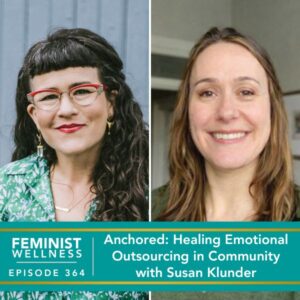
In this episode, I’m joined by Susan Klunder, a recent graduate of Anchored, my six-month coaching and somatics program. Susan shares her lived experience of moving from chronic people-pleasing, perfectionism, and emotional outsourcing into a life that feels grounded, joyful, and genuinely her own.
We talk about what it was like before Anchored, when she had done years of therapy, coaching, and personal development, but still felt overwhelmed, disconnected, and driven by fear rather than trust. Susan reflects on how Anchored helped her understand her nervous system patterns in real time, shift out of overfunctioning, and develop deep self-trust without losing her drive, ambition, or care for others.
This conversation is a powerful example of what becomes possible when nervous system healing happens in community. Join us as Susan shares how Anchored changed her work life, her relationships, her parenting, and her capacity for joy. If you’ve ever wondered what’s actually on the other side of emotional outsourcing, this episode offers a grounded, honest look at what healing can create.
If you’re ready to break away from anxiety and codependent relationships so you can live a life of joy and confidence, Anchored is for you. This is my 6-month high-touch, high-results coaching program, and we’re currently enrolling. Click here to find out more!
Key Takeaways & Timestamps:
[00:00] – Anchored and What’s Possible on the Other Side
Why this alumni conversation matters and what Susan’s story reveals about healing emotional outsourcing.
[03:12] – Life Before Anchored
Living with chronic overwhelm, perfectionism, and people-pleasing despite years of therapy and self-work.
[07:05] – What Made Anchored Different
How nervous system–based coaching and somatic practices created real, lasting change.
[11:42] – Healing Without Losing Your Edge
Why healing emotional outsourcing didn’t reduce Susan’s ambition or competence, but strengthened both.
[16:18] – Anchored at Work and at Home
How grounding, self-trust, and presence transformed leadership, parenting, and partnership.
[21:04] – The Power of Anchored Community
Why group coaching, co-regulation, and being witnessed accelerated healing.
[26:09] – Letting Go of Overfunctioning
Learning to stop managing everyone else and trust others’ capacity.
[30:10] – A Message for Anyone Considering Anchored
What Susan would say to someone on the fence about joining.
Listen to the Full Episode:
Episodes Related to Anchored and Healing Emotional Outsourcing in Community:
• Ep #330: Emotional Outsourcing 101
• Ep #331: The Real Reasons You’re Not Joining (and Why They’re Exactly Why You Should)
• Ep #362: Why Nervous System Healing Isn’t Meant to Be Done Alone
Featured on the Show:
• Download my free orienting exercise by clicking here!
• If you have not yet followed, rated, and reviewed the show on Apple Podcasts, or shared it on your social media, I would be so grateful and delighted if you could do so!
• Join me in my group coaching program, Anchored: Overcoming Codependency
• Come join us in The Embodied Learning Lab!
• Get your copy (or 10) of my book, End Emotional Outsourcing!
Full Episode Transcript:
This is Feminist Wellness, and I’m your host, Nurse Practitioner, somatics and nervous system nerd, and life coach Béa Victoria Albina. I’ll show you how to get unstuck, drop the anxiety, perfectionism, and codependency so you can live from your beautiful heart. Welcome, my love, let’s get started.
Hello, hello, my love. I hope this finds you doing so well. This week we are joined by Susan Klunder. She was a member of the Anchored cohort that just finished up, and she is such a beautiful model of what's possible when we do this work. She came into Anchored with a lot of doubts and is living a really different life now on the other side of this program. It's so inspiring, it makes my cheeks hurt to think about it.
So I am sharing this conversation with Susan today because when I was so deep in my own emotional outsourcing, I had no idea what was possible on the other side. No clue. No models of how to do life differently. And I know that it's challenging to live life differently if you can't even picture what it could possibly be like. And so I'm thrilled to share the stories of graduates from my Anchored program, my six-month coaching program, who can share just how much their life has changed and how they're living really differently now. So, without further ado, Susan.
—
Beatriz Victoria Albina: Hello, my love.
Susan: Hello.
Beatriz Victoria Albina: Oh, I'm so glad you're here.
Susan: Thank you so much for having me.
Beatriz Victoria Albina: Would you take a moment, please, to introduce yourself to the good people? Your name, your pronouns, where you're living, if you want to.
Susan: Yep. Yep, love it. So my name is Susan Klunder. I am living in Toronto, Ontario, Canada. My pronouns are she, her, and hers. And I am an American, I'm a Canadian. I grew up in the Middle East, but I was born in Seattle, Washington, and I've been living in Canada since 2012 and just been loving every moment of it. I am a mom of a five-year-old. I have a husband as well. Why not?
Beatriz Victoria Albina: Why not?
Susan: Yeah, and that's basically me. Oh, and then another thing I guess I would also say, I'm also a very career-driven person. I'm a VP of HR at a tech company. I've been in HR for 20 years, and so of course that's another really important thing.
Beatriz Victoria Albina: Yeah. Yeah. And I think everyone, I'm going to speak for your collective in Anchored, say everyone really appreciated that you would bring work stuff really often, and it was really helpful for everyone to have that focus on career because so often we just talk about emotional outsourcing as, when my mom calls, I feel cringy. Or, right, which is, yes, but also it's so nice to remember that it deeply impacts us at work, right?
Susan: 100%. 100%.
Beatriz Victoria Albina: Yeah. So you were just in Anchored.
Susan: Yep.
Beatriz Victoria Albina: And you were just telling me, I cut you off because I was, let's hit record. You were saying about the last month since your group wrapped.
Susan: It's been, oh my gosh, I would even say before that, I'm a completely changed person. And I'm saying that with every bit of my soul, my being, everything. I'm a completely changed person. I came into Anchored after having done in the healing space for so many years knowing that there's something that I need to heal. I want to even start with I did a lot of talk therapy. I went to retreats. I did yoga. I did meditation. I did EMDR. I did CBT. I did journals. I did workbooks. I did everything. And I even got a one-on-one coach that I had for many months. And I was just still drowning and drowning.
And when I found Anchored, I was looking at some different programs, exactly the point you said, I was looking at programs that were more - that kind of sold themselves more on the high-driven career woman. And then I saw Anchored, and everything about the program spoke to me, and what I loved about it is it's solved, every day it's solving, focusing on career women and everything else that I am, and it solved all of that. So I am so very grateful for the program. And I didn't know where it would lead me. I just said, let's give it a go.
Beatriz Victoria Albina: Wow. Wow. So tell us, what were things like before? What led you to seek out all these healing modalities for so long?
Susan: Yeah, I would be in the world feeling the weight of the world, feeling the pain of the world. I'd walk down the street and feel, just see people in pain. Growing up, I was brought up in a family where my parents weren't able to be the type of caregivers that I would have wanted. They were very much wrapped up in their own stresses and difficulties, and they, the one way that they knew to help us and create a life for us was to push us really hard to get A's. So I learned very fast, which was spoke specifically again, straight to all of this was Anchored, speaking specifically to perfectionism, people-pleasing, overgiving. And those are things that I knew, I give everything that I am out and then I have nothing for me.
And I'd hear that thing over and over again through all the modalities, oh, put your oxygen mask on, don't do the same slide you always do, go a different slide. And I was, okay, great. Thank you very much. But I don't know how to go down the slide, the other slide of the one that I just know. And I don't know how to not look at people and just see their pain and want to help them. And that's where I always went with all of these programs, but Anchored was the one that actually showed me how.
Beatriz Victoria Albina: And what was it you learned? Like what shifted?
Susan: Yeah. I think the first part that is so key is it was a slow process. And I am so, again, grateful for the program for it being six months. And it's not just six months, right? Six months is the program itself, which is with the group, but then you get to do even more learning every single day after that in your own time. What shifted for me was the knowledge, of course, more than just why am I a perfectionist, people-pleaser? What shift, because I knew that from these other modalities. What shifted for me was being able to identify when I'm going into those mechanisms to try to keep me safe and to identify it right when I'm going into those and say, ah, I'm doing that thing again that I do, and of course, I'm doing it with love and being able to pick another way. And so that's what it's given me.
And even to talk, I want to even give an example. Last week, that point that I mentioned about walking into the world and seeing pain, I'm able to now say to myself, Susan, you are you and that person, yes, I can see that they're feeling pain, but that is them. And I wasn't able to do that before. I would go into the world in a very different way. And so Anchored has taught me how to say, okay, I am with me. I am centered. I am grounded in myself and in this moment. Today, before the call, I also did the walking exercise where I'm feeling my feet on the ground, bringing myself continually into the somatics into my body. And that's exactly what Anchored taught me. Every single moment, I'm using it.
Beatriz Victoria Albina: Wow. Wow. And to see your smile. Oh, y'all. I can't even begin really to see your transformation.
Susan: And joy, Bea, right? I remember me telling you all the time in Anchored and you'd coached me on this. I was, Bea, I don't see joy. I don't have joy. I'm not able to live in joy. And through other coaching programs, I put my values out there. I knew that joy was something I wanted to see, but I just still couldn't see it. I don't know if I can put this into words in the way that I want to, but I can tell everyone that I am able to see joy now. I'm able to be present in this moment and say, and I can't say it. I don't want to worry about the future. I don't want to worry about the past. That's not what I want to do. I want to be in my joy right now, and I'm able to feel that in a way that I truly never believed that I was.
Beatriz Victoria Albina: And we all watched you step into more joy. We all watched it happen.
Susan: Yeah.
Beatriz Victoria Albina: I feel like I watched you came in, and if you don't mind my saying this, with a heaviness on your little shoulders. The energy sitting on you looked heavy. And there was this Pig-Pen and Charlie Brown?
Susan: Yeah, he's...
Beatriz Victoria Albina: Right?
Susan: Movement.
Beatriz Victoria Albina: Yeah. It was that, but worry inside you. Yeah, this rumpling ball of worry in your chest. And we all got to watch it just unfold and unfurl and release. Does that feel accurate?
Susan: 100%. And even more after the program too, and even more every single day, which is also, it just keeps on, it keeps on unfurling and unfurling, and it hasn't stopped. And I guess it's been a month since the six-month program, and truly every day it's unfurling more. I have a trust in myself now. I have a belief in myself. There was this part of me that thought, hey, I've reached success with these practices of overachieving, overgiving. And it's worked for me. But I, of course, knew that it wasn't, it was creating heaviness and fear that was driving me, versus now, I'm driven naturally and I was scared that I would lose drive. I haven't lost drive. I'm able to actually achieve more and have more confidence because I don't have that moving in the background.
Beatriz Victoria Albina: Or in the foreground. All around me. I want to dive into that because it's a big thing that I hear from folks, a big worry about not just Anchored, but doing this work. I'm going to lose empathy. I'm going to lose my kindness. I'm going to lose caring about people. I'm going to lose my productivity. I'm going to lose my edge. And you've done the opposite.
Susan: Yeah. And I didn't believe it. I had that exact thought. Yes. I'm going to lose my edge. I'm going to fail at work. I'm not going to be able to be the head of HR any longer. I'm going to be terminated if I don't continue working at this capacity.
Beatriz Victoria Albina: And what's happened?
Susan: What has happened is I am able to be very in touch with how I'm feeling in any given moment, and I know when to stop. I know when I need to take care and take a small break, and I do it. I know when especially in any role, you can feel you need to do, but I know that there's times when I need to not. I need to just be there for my team. I need to let other people do. So I have not lost my edge. I've actually have more edge now.
Beatriz Victoria Albina: It's a really amazing how softening into presence allows us to work in this optimal capacity.
Susan: Mhm.
Beatriz Victoria Albina: Because you're bringing your whole self versus this fragmented self that's trying to people prove. I'm good enough. I'm good enough. A+, I'm good enough.
Susan: Yes, 100%. And it was and I actually over the weekend, I read a performance review that I was given in, let me see when it was, in 2018, which I know was a while ago. And it says specifically, Susan is amazing at X, Y, Z, A, B, C, but the next step, she needs to work on being overwhelmed. And she needs, yeah, just being overwhelmed. And that was in the way, just feeling I need to solve everything now. This has brought me to a place when I know that what can I solve now? What are the priorities now versus I have to solve everything now in order to be safe? Which obviously, even in that example of that performance review, I wasn't safe and I didn't feel safe. Now I'm able to say, okay, what are the levers, the few levers, two to three max, maybe one, that I'm going to pull right now. And let's just pull that one. Let's pull it with 100% versus trying to pull all of them at once.
Beatriz Victoria Albina: Ooh. What a more steady, grounded, if you'll excuse me, anchored way to work, to do the one thing instead of having that, there's this freneticism to emotional outsourcing, right? Because it's never grounded.
Susan: Yes.
Beatriz Victoria Albina: And so that metaphor, pull the one lever. That's beautiful. That's potent.
Susan: Yeah, exactly because it wasn't about me. I was trying to solve it for everyone else. And I guess I know that's what again this program has been so helpful about with perfectionism, with people-pleasing, and with emotional outsourcing. It is, it was me saying, I'm trying to solve it for them, and if I can solve it for them, then I'm going to be okay. But now I say, I'm not solving it for them. It's not even about them. It's about me.
Beatriz Victoria Albina: Wow.
Susan: And I'm not going to try to get in their heads. I'm not going to. I'm going to be in my own. And I wasn't in this one before. I was always in all of theirs. Again, all of so now I'm just, nope, I'm just here.
Beatriz Victoria Albina: Yeah. What an amazing shift.
Susan: This is life. I will say from my heart, I knew it before. I was not living. And it was a very sad and extremely scary place. Because I looked at all the achievements and the things I had in my life and I just was sad and dark every single day. And nothing helped. And in a way again, I just am so, I'm so grateful. And I just believe and I know it was scary. It was scary to invest that. It was scary to take that investment from a time perspective. I remember when you and I talked in that first call, I was, I don't know, I've got a full-time job. I'm a full-time mom. I've got all these things. I don't know how I'm going to make the time. But you always said, you make it in your own time. You make your space. And so for me, my answer was, I'm going to make time for the community. I'm going to create as much space as I can to do the content, but the content I can always do later. And so I'm going to build community now. And you always made that very clear that you can't fail in Anchored. And I didn't fail. I just did it how it was right. I created it for me. And I didn't get fired. I'm still top of my game if not more top at work and at home.
Beatriz Victoria Albina: Yeah. And I bet your direct reports are really happy.
Susan: Yeah, my husband is happy. My daughter is happy. My director reports are happy. My bosses are happy. it has changed my home life in a huge way. I used to get so frustrated and angry all the time and big outbursts at my husband. And he's an amazing man, but me wanting him to do things on my timeline, me wanting him to read my mind and understand how I wanted it done. And now again with Anchored, it's completely healed that because I don't need to be in his mind. I don't want him to read my mind, which I love is part of that kind of teaching too. And I don't have those outbursts in a way. Of course, there's still moments I do and that's okay. But I'm able to appreciate him for who he is and then I'm able to show up as the person I want to be.
Beatriz Victoria Albina: My cheeks hurt from smiling so hard, Susan Klunder. Oh my goodness gracious. Tell me about mom-ing. How is your parenting different? You love that baby.
Susan: I love this child. Oh my gosh. She is so beautiful. So my mom-ing is different because I'm able to be there calmly in a way, exactly we said about Pig-Pen, the freneticism. I would always show her so much love, but there's no question about it that she could also feel all that was going on. And I would find that when I'd walk into a room or even be with her, I'd be with her, but I would still be, oh, but what about the laundry? Or, oh gosh, those potatoes need to be eaten. And I would try I would just be trying to again do so many things at once. And now I’m, I have got that email from work. I have to do X, Y, Z. No, you don't. Right now, we are going to be present with Callie because she is amazing and she's beautiful and this is our time together. Let's not worry about the potatoes and the laundry. It's fine. And I actually think my house looks tidier now than the beginning Anchored, and actually I clean it less. Because I'm able to just be focused on it and it doesn't worry me in the way that it did. The weight is not on me anymore. So yes, it's changed that. And of course, I need I want to work more on my mothering and also again, putting more of an oxygen mask on, but it's definitely improved.
Beatriz Victoria Albina: Do you remember that challenge I gave you around your house?
Susan: Yeah, dust bunnies.
Beatriz Victoria Albina: Dust bunnies. Leave them.
Susan: Dust bunnies. Mess. And I remember I was, Bea, I don't know what to do. I've got all these things. And that was also hard for me to even call myself a perfectionist because I fell into this trap of, I know I am, but I know I'm not perfect. And of course, the program and you also really showed me that perfectionism isn't about being perfect. It's about feeling I need to be. And so I've been able to now, I'm able to say, I don't need to be because I am. I don't need to be anything, just be.
Beatriz Victoria Albina: Yeah. Can I loop us back to talk about the community? Because I have to say, you are most beloved in this community.
Susan: Oh, so good.
Beatriz Victoria Albina: People get nervous, it's strangers, will they be kind? Will it be too much? There's a lot of worry, which I I understand. So could you talk a bit about your experience in the community and just what it was like to be with all these people and to get coached in front of them?
Susan: Yeah. So at first, exactly, I was like, okay, the program that I select, the community is going to be so important. I want to see myself in the community. And that's why I was looking again at these programs that were these professional women. But I remember when you and I talked about it and it wasn't about professional, it was, what's the community that I will understand and will understand me. And it is exactly what Anchored is. So people that are perfectionist, people-pleasers, and on and on.
What's so beautiful about the people that I met is that we present differently. We come from different backgrounds. We have different jobs. We are even our perfectionist and people-pleasing habits also have a different flavor. But what connects us so much is that we have, we came into the world and using these types of strategies that we were trying to use and that worked for a little bit and they were coming to the point where we know and can identify this isn't the answer anymore. And I was able to see myself in their stories. They definitely I got, I think part of why, I get good feedback from me is a lot of people would really appreciate also my stories and saying, thank you so much for speaking up and sharing that example because it exactly spoke to my heart and really helped me. And that they did that, everyone in the community also did that for me.
And I had, I think people, it was so beautiful about it is me and the other women in the group, we're of course still in touch. But they also, even when we don't message or speak, they're in my mind, they're in my heart. You're, people would say this about you as well. you're in my mind, you're in my heart every single day. In the way that I'm, they taught me how to be, no, thank you. No, thank you. I'm not going to do. And I say that to my thoughts. I say that to people. No, thank you. I hear your voice with me and it's with me and the community is with me in that and it helps remind me. And I had a moment as well a couple weeks ago where I wasn't very sure what to do in the situation. I called someone from the community. They didn't pick up, but it didn't matter. It was so beautiful because I left her a voicemail and then through the voicemail, I was able to come to the answer that I needed to be able to get out of the car and handle that situation. And then she and I did end up speaking after about her situation. It was beautiful. But I didn't even need that, but just knowing that she was there and I left that voicemail was exactly what I needed. So the community is so key and having these people on that six-month journey plus with you.
Beatriz Victoria Albina: Way to co-regulate.
Susan: Yes.
Beatriz Victoria Albina: It's so phenomenal. What a delight. That's one of my favorite parts. You know there's gals from the 2020 class that still vacation together, right?
Susan: Wow. No, I didn't know that. That's amazing.
Beatriz Victoria Albina: Do it. I think they went to Martha's Vineyard or Block Island recently.
Susan: Beautiful.
Beatriz Victoria Albina: Get your gals together.
Susan: Yeah.
Beatriz Victoria Albina: Go on a trip. It's so fun.
Susan: And then that the community is even larger than the one class. that's, I'm excited to go to some of those events as well and breathing, breathing.
Beatriz Victoria Albina: Yeah, come to alumni stuff. It's really fun and it is amazing to see people who are five and six years out of Anchored. Yeah, and to hear their stories. It's really fun. And it is, it's this siblinghood that you can connect around. Because we get each other.
Susan: Absolutely. And I think that if it speaks to anyone, of course, again listening of these specific things that brought me in, they're they get to the heart of it. They get exactly to the heart in a way that nothing else did.
Beatriz Victoria Albina: Amazing. Amazing.
Susan: Thank you so much.
Beatriz Victoria Albina: Thank you so much. You brought your whole heart, your whole spirit, while working full-time, while being a mama bear, while, I mean, you had some big family stuff happen.
Susan: Yeah. My dad passed away, my mom got sick, and through it all, again, the community was there, the learnings were there. I was coached through all of those situations and they continue just to again adding fruit. And what's beautiful again about the community and the even you can get coached, of course, I was coached on calls. I was also coached online itself, the and written form. it's you're connected all the time. And that was also part of really the healing that took place.
Beatriz Victoria Albina: Yeah. And I was really glad when you had to travel for the funeral and stuff that we had the offline asynchronous support so that we could all have your back and let you know you're loved and cared for even when you couldn't make it live. I was extra glad that we already had those things in place.
Susan: 100%.
Beatriz Victoria Albina: And I'm glad you felt loved because we were all care bear stare in your direction.
Susan: So good. And you told me as well, I remember when I was also questioning the program, you said, Susan, it's going to be, and that's exactly what it is. I'm able to go and just be.
Beatriz Victoria Albina: Just be.
Susan: And focus. So that's exactly what I've been able to achieve just you said.
Beatriz Victoria Albina: Yeah.
Susan: And I keep on saying that, but I'm just so grateful. And the podcast too, so I was one of the people that I didn't know you so well from the podcast originally, but now I've been, it's just such a joy every day now going through all of your, going through the podcast. I'm enjoying them so very much and there's so much goodness in there as well. So again, it's just never-ending.
Beatriz Victoria Albina: Thank you. Oh, that brings something to mind. Sometimes people say, wait, if I have the free podcast, why should I join Anchored? How is it any different?
Susan: Yeah. It's different because it's tailored to you. The coaching calls, you're able to bring up for six whole months, right? We're bringing up daily events, not just the coaching calls, but on the community, we're bringing up daily things that happen in our lives, and we're able to use the content and get coached. You're coaching us and then you bring you have all these other speakers and expert speakers come in that can also coach us. And each one of those all added a different flavor and learning to the content. So there's no question about it. It's podcast and the program. I know that the other part about the program is having a podcast, you can listen to or you could not listen to, but having the community knowing that we're coming together twice a week in this case, it I made sure not to miss those calls. And so, yeah, it's and. It's and.
Beatriz Victoria Albina: Yeah. I'm glad that was your experience.
Susan: Yes. No question. And again, these podcasts are, there's so many jewels in them. There's so many jewels in them. And there's also jewels in the content we created through the coaching calls. So I'm relistening to those as well.
Beatriz Victoria Albina: Oh, you're listening to the coaching calls.
Susan: Yeah, yeah. Because there were so many, yeah, lights on for me through other people's calls, through mine, and then I could relisten to those and relearn and just really look at it again from a another kind of a a new day perspective.
Beatriz Victoria Albina: Ooh.
Susan: And again, yeah, there's so much goodness in them and with the program, I have access to those. I can watch them anytime. and that's been huge.
Beatriz Victoria Albina: I'm glad that you're speaking to the power of the collective coaching because people say, I know Anchored sounds great, but I really want that one-on-one attention. Can you speak to your experience of group coaching and how that was supportive?
Susan: Absolutely. I think that as a people-pleaser, a perfectionist, part and again, I've done so much one-on-one coaching and therapy. I think the stress that also comes with having to be prepared for that course, having to be prepared for that day, that coaching. I'd always again, rack my brain, be, oh my gosh, I have to write notes for what exactly I'm going to achieve today in this call in this therapy session. This, you don't need to, you don't produce, you don't come with anything because if something comes to you and you feel you want you need coaching on it, you raise your paw, you raise your hands, you get coached on it. Otherwise, there's a lot of weeks that would go by that you don't feel that way, but other people will bring theirs and you learn from those.
And again, we built this community of women that can come together and be part of that together and you get to know these people and they're in again your mind and your heart and examples from their lives that then you can bring into your own. So yeah, there's no - I wasn't sure either. I was thinking, oh, I need one-on-one, but one-on-one was not actually useful for how I - with my perfectionism. This, the group coaching was exactly what I needed.
Beatriz Victoria Albina: It really is amazing how other people will speak to something in your heart you didn't know was in there.
Susan: Yes. And present it in a way that just is clear.
Beatriz Victoria Albina: Because it's not your michigas. It's not your thing that you're rolling around in. And so when Megan, I'm trying to think of a name that wasn't in our program, when Megan says something, you’re like, oh, wow. You read the journal I couldn't write.
Susan: Yes. And this feeling of being alone is part of it too. I think that with kind of one-on-one therapy, it can feel, okay, I'm the one with the problem. The coach or the therapist is the expert. And of course, they are, you are, they're the expert, but then again, this builds it differently because it's there's expertise from everyone, and you yourself are an expert. And then you're able to heal all of that together and this big feeling of I'm not alone in perfectionism, people pleasing because not everyone is that. Not everyone presents in that way. But this community does. And I've never met a community that before. I've met a lot of communities, but again, that was the such a key component to my healing was where we feel all these things and we're trying to solve it in the same ways. So let's get out of it together.
Beatriz Victoria Albina: Beautiful. Oh. Sweet Susan. It is, yeah, it's just doing my heart so much good to see you and to see you thriving in such a potent way. And I think that word gets bandied about.
Susan: Yeah.
Beatriz Victoria Albina: But you're really doing it.
Susan: I'm doing it. And even my doctor today said, I just left for a regular checkup and he is not the type of person to give compliments in any kind of way. He does not ever give a compliment. And then when I was leaving today, he said, you know, I really want to tell you, I'm really very impressed with everything that you're doing on yourself with this problem. And he specific specifically meant from a doctor perspective, anxiety and depression. And again, he's a family doctor. He has no reason to say any of that and he doesn't, but he said that. And again, it's not about the external world. You also - really the program showed me that. But it does mean something. It does mean something. Not that I need him to say that, but the fact that he did. And people have been saying that in many ways, Bea. been saying, my mom said it, my sister said it, and they're also not a type of people to say they see change. My husband, we see change in you. And of course, I don't even need them to say it because the most important part is I feel very differently.
Beatriz Victoria Albina: So to anyone who's listening, who's on the fence, what would you say?
Susan: I would say if you've tried, you feel you've tried everything, you've reached this place where it's not working. You're scared to take this leap because it is an investment in yourself, give it a try. I took that leap. I am so grateful that I did. If I was to add together, if it is, it's not about dollars and cents, but if I was to add together the cost of this program versus all of the other programs that I did that truly did not lead me to where I am through this program, this is exactly worth every single penny. It is actually much, much better of an investment. So there's no question in my mind. I would be, I am a completely changed person from this program. It is this program that did it for me and nothing else. And so really give it a try and you're going to see you might be questioning on, moment one, but you're not going to be questioning once you start meeting everyone in the program and knowing that you made this big commitment to yourself and you're on it. And I also think that was another thing for me is the commitment itself is also one which for people in your life to know I'm going to make time for this program because it was a big commitment and I am committed. And that's such a big part of showing up and being part of it and making the change.
Beatriz Victoria Albina: Beautiful. Beautiful. Any last words? Anything else you haven't shared that you want to make sure to share?
Susan: Oh my goodness. Not that I can think of.
Beatriz Victoria Albina: Perfect. I mean, you've shared a lot. You've shared a lot. I just wanted to just...
Susan: Yeah, no, but I can't - let me just make a moment, let me say, I think make sure I've said everything that I wanted to say. No, I feel very right about that. Yeah, I feel good.
Beatriz Victoria Albina: Oh, well, Susan, thank you again. I am so grateful for your time and energy to come here and to share your story, to be a model of what's possible for everyone out there who's nervous. Can they change? Will they change? Will it last? Is it real? You're such a beautiful model of what is actually possible when you turn towards yourself in this way. So thank you. Thank you. Thank you.
Susan: Appreciate you.
Beatriz Victoria Albina: Yeah, likewise, my darling.
Susan: Thank you, Bea. Please take care.
Beatriz Victoria Albina: Thank you.
—
My love, thank you so much for joining us. Isn't Susan so fantastic? I am just so astonished at my good fortune each and every day that I get to coach the good people of Anchored, that I get to know them, to hear their stories, to love them, to share in their joys and their sorrows, just to share life with them. It is truly a gift. And I want to thank you for being here to bear witness to Susan, to love her up, and to learn from her beautiful experience. So thanks again for joining.
If you want what she's got, you know where to get it, BeatrizAlbina.com/Anchored. Let's do what we do. Gentle hand on your heart should you feel so moved. And remember, you are safe. You are held. You are loved. And when one of us heals, we help heal the world. Be well, my beauty. Ciao. Ciao. I'll talk to you soon. Ciao.
Enjoy the Show?
• Don’t miss an episode, listen and follow on Apple Podcasts, Spotify, or RSS.
• Leave a review in Apple Podcasts.
• Join the conversation by leaving a comment below!